
This is Real Log, a series that brings you stories from the field. Today, we’re sharing what it’s really like for marathon organizers who are entering a new heyday thanks to the booming running trend.

“Is it really true that signing up for a marathon these days is as hard as getting concert tickets?”
Over the past few years, marathons have enjoyed unprecedented popularity and have become the center of the current running boom. Major races such as the Seoul Dong-A Marathon and JTBC Seoul Marathon sell out as soon as registration opens, and less demanding courses like half marathons or 10K races close in an instant, just like “first‑come, first‑served” ticketing. We are truly living in an era where marathons have gone mainstream.
This boom has grown beyond a passing fad and settled in as a culture. As of 2025, nearly 400 marathon events are held each year across the country, in every season. In particular, active participation by people in their 20s and 30s and the spread of running crews on social media have turned marathons into a hobby where people run together and connect. Rather than focusing solely on finishing, runners are increasingly interested in recording and sharing the entire journey.
As a result, expectations around marathon souvenirs have also risen. T‑shirts, bib numbers, and finisher medals are no longer seen as simple giveaways. They are perceived as mementos that symbolize each participant’s achievement, and because they are produced in limited quantities, their collectible value is even higher. However, as the number of participants grows, complaints such as “I never received my bib” or “Only my T‑shirt didn’t arrive” are also increasing. From genuine packing mistakes to intentional attempts by some participants to receive duplicate items, these issues quickly become major headaches for organizers.
Based on our meetings with various clients—including marathon operations agencies, sports brands, merchandise sellers, and goods trading platforms—we have summarized some of the most common challenges that come up in the field. The larger the event (with tens of thousands of participants) and the higher the collectible value of the souvenirs, the more any confusion around “who received what” becomes a sensitive issue that can easily undermine trust in the brand.

Many operations teams say, “Most customers are acting in good faith, but sometimes it is extremely hard to judge.” Because marathon souvenirs are almost like limited‑edition items with fixed quantities, and because they symbolize a participant’s record and sense of accomplishment, organizers find it difficult to simply ignore a request that “nothing arrived.” Yet among tens of thousands of outbound shipments, it is practically impossible to determine case by case whether an item was genuinely omitted, there was a simple misunderstanding, or the request is an intentional attempt to receive duplicate goods.
A case that marathon organizers encounter frequently looks like this: one person registers for the race, receives their bib and T‑shirt, and then contacts customer service claiming that they did not receive anything and requesting re‑shipment. The extra bib that is sent out is then used so that a friend or partner can join the event. The organizers only realize what happened when multiple chips associated with the same registration show up on race day.
There are also many cases of souvenirs being traded on social media or secondhand platforms. The larger the scale of the race and the more participants there are, the harder it becomes for organizers to distinguish truth from falsehood.
When these kinds of requests pile up, they create a heavy burden on customer response teams as well. For customers who claim there was a missing item or misdelivery, the team must explain the situation, review whether to send a replacement, and check with the courier company, often going back and forth multiple times. In that process, responses to cases where a genuine mistake did occur can actually end up being delayed. Without objective records that show exactly what happened at the time of shipping, both response speed and customer trust inevitably suffer.
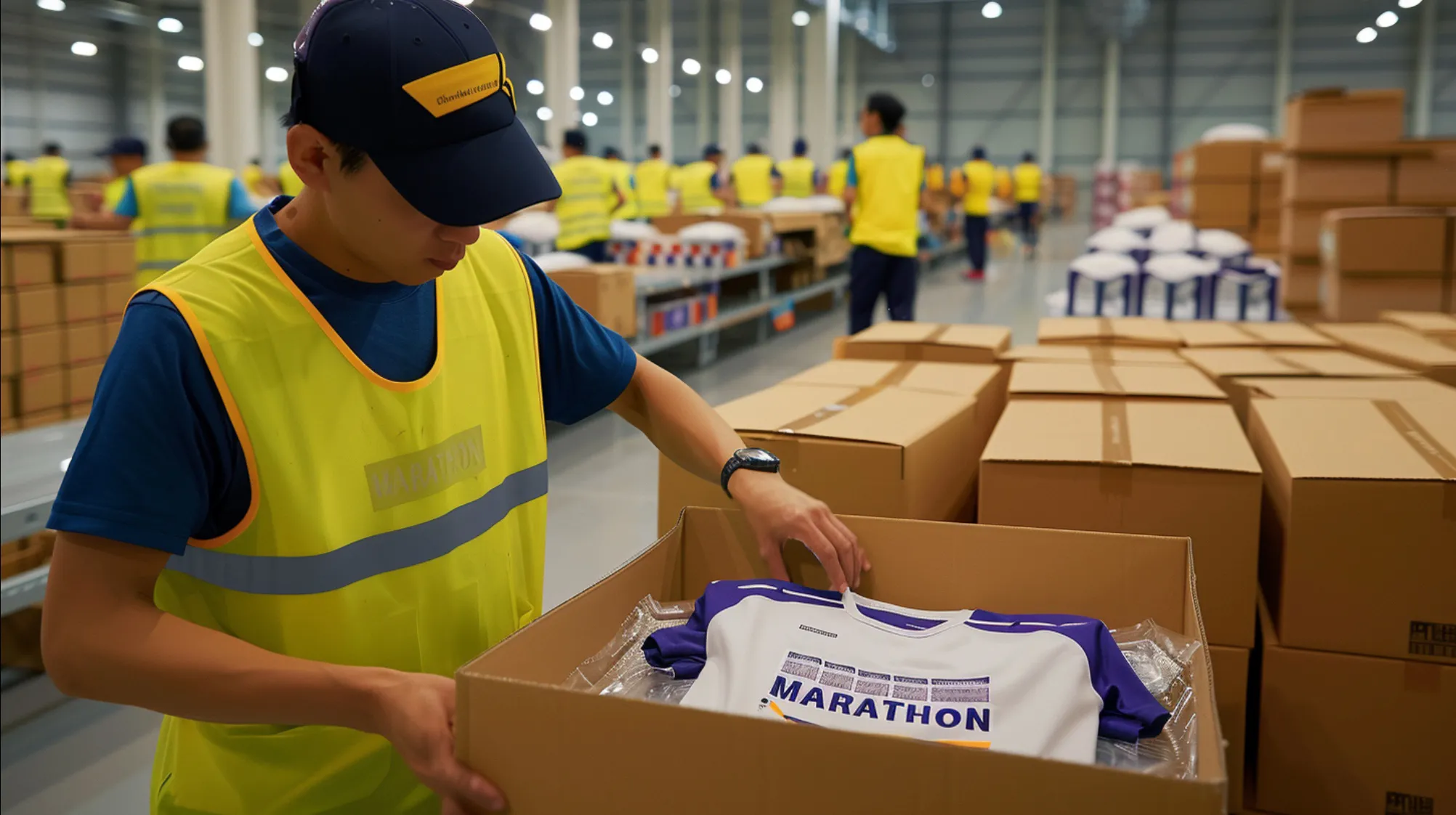
In large‑scale event operations where thousands of shipments are going out, the most confusing moment is when even the team cannot determine whether an item was actually packed. When a false request comes in for additional quantities or for the purpose of resale under those circumstances, it affects not only operating costs but also the brand’s image. In such situations, what matters most is not “memory” but “evidence you can literally see with your own eyes.”
By recording the entire process—from what goes into the package to taping and sealing the envelope—in high‑definition video, organizers can immediately review the shipping status of a specific order when a claim arises. Video records become an objective standard for determining whether a claim is valid, and even in moments that are hard to explain in text alone, “visually verifiable records” help build fairness and trust in operations.
In traditional setups, customer service, operations, and logistics all work separately and pass information back and forth, which lengthens response times and accumulates customer frustration. But if you have video records of the packing process, every team can look at the same footage. That means when an issue occurs, all teams can communicate in real time based on the same video data.
Because everyone can instantly check in what order which products were packed, and whether any specific item was left out, not only does the quality of customer support improve, but internal communication speeds up dramatically.
Running and marathons have become more than a passing trend; they have taken root as a culture. Participants are not just coming out to “run.” They are enjoying the surrounding events and booths, building experiences, and making memories through the culture as a whole. That is why even a single bib number or T‑shirt carries a participant’s trust in and satisfaction with the brand.
Souvenir issues that arise as the scale of operations grows are not simply packing problems. They are structural issues related to protecting overall brand trust and saving time for both operations teams and customers. This is why we now need systems that make it possible to clearly manage on‑site operations—where the facts are often hard to verify—through video recording tailored to real‑world situations. If problems can be resolved using visible video data, both responses and day‑to‑day operations can become significantly lighter.
In large‑scale events like marathons, issues of missing or misdelivered souvenirs are often directly tied to the brand’s image. The higher the expectations around souvenirs, the more carefully the delivery process itself must be managed.
The key is to create a system that accurately records the shipping moment and enables responses based on those records. Protecting trust with customers ultimately starts with having a structure where anyone can clearly see and share “what really happened.” Only with such a system in place can organizers give people confidence that, even amid recurring confusion, the event is being run fairly.


