
Over the past decade, logistics automation has expanded rapidly. Conveyors, shuttles, AMRs, and robotic arms have been introduced across fulfillment centers, making speed-enhancing technology a core strategy for operational efficiency.
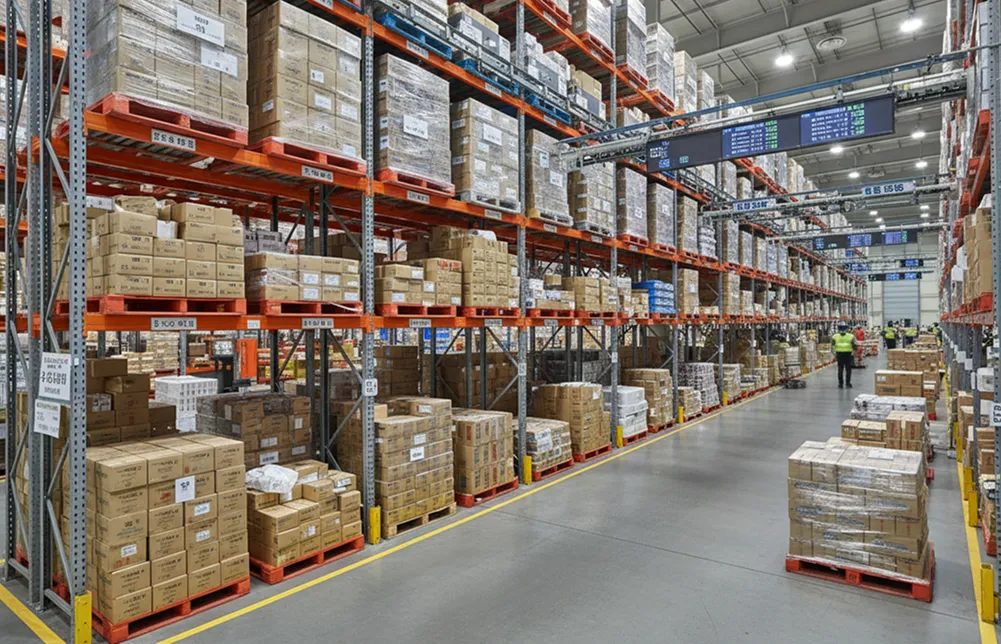
Of course, the level of automation in logistics centers still varies significantly. Many facilities still rely primarily on manual operations, and there are plenty of areas where automation investment is needed. Nevertheless, some leading companies are beginning to consider the next stage of automation—machines that can make decisions on their own—as a future strategy.
In this context, the concept of "Physical AI" is naturally gaining attention. Physical AI refers to robotic technology that combines sensors, vision, and AI models to understand and respond to the environment, rather than merely repeating predetermined actions.
Although it has not yet become widespread, as global companies experiment with new operational methods based on this technology, the logistics industry is starting to recognize the shift from automation to smartization, and then to decision-based automation, as an important future trend.
Physical AI is not merely about adding AI to robots. It involves integrating sensor technology, vision recognition, and path optimization models, enabling machines to understand their surroundings and move autonomously based on their judgments.
Until now, logistics automation has mostly involved structures that repeat predetermined tasks. Conveyors moving at intervals of a few seconds, shuttles traveling only to designated positions, and robotic arms performing programmed actions all follow a fixed flow without deviation.
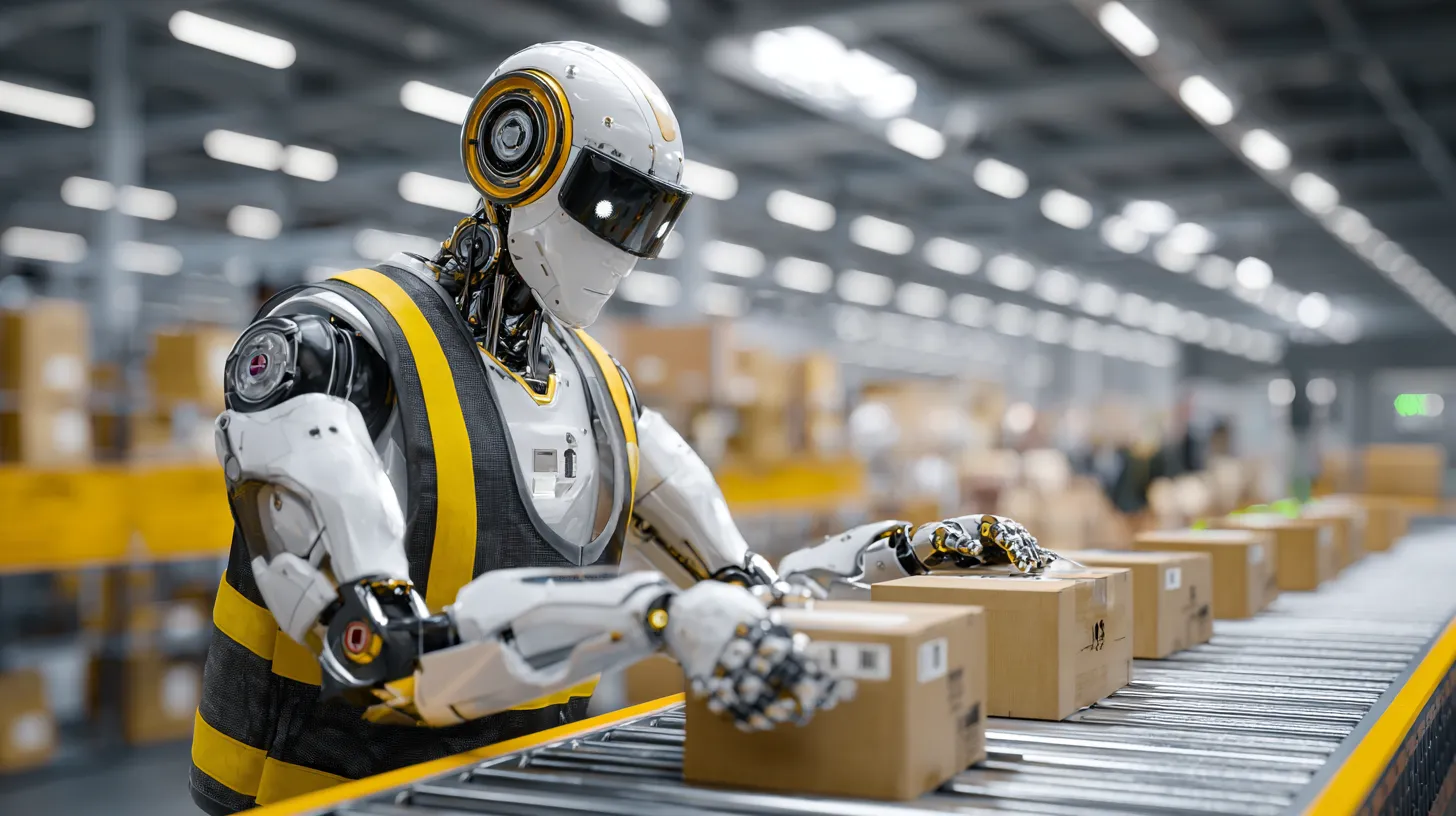
The reason Physical AI is gaining attention as the next step is that machines can now partially take on the role of observing and making decisions like humans. In other words, it's not just about automating simple tasks, but about technology absorbing some of the human abilities to judge, correct, and adapt.
In logistics settings, understandable examples include:
All these technologies share the commonality of transitioning from predetermined movements to situation-based movements.
Although Physical AI has not yet reached large-scale commercialization, it is increasingly appearing in discussions about future strategies in the logistics industry because it most clearly demonstrates the direction of automation where machines make their own decisions.
As Physical AI absorbs repetitive tasks, roles that straddle workers and managers begin to be redefined. Workers will see a decrease in simple tasks like picking and stacking, and an increase in roles such as verifying parts where robots made incorrect judgments or adjusting for exceptions, focusing more on maintaining standards.
Managerial roles will also change. Instead of operators who coordinate people and volumes as in the past, managers will define how automation systems should operate and create rules for handling exceptions, shifting from coordinating operations to designing operational structures.
Logistics organizations have traditionally relied heavily on experience-based problem-solving. However, with the introduction of Physical AI, the approach of resolving issues through experience will increasingly show its limitations. Instead, analyzing data from the time errors or bottlenecks occur and reflecting the findings in system improvements will necessitate an integrated structure of technology, operations, and data.
This change elevates the importance of hybrid positions that possess technical understanding, operational insight, and data interpretation skills. Consequently, organizations will shift from experience-based to data-driven operations, laying the foundation for long-term improvement in the quality of logistics center operations.
One of the biggest operational issues faced by logistics centers is the ongoing labor shortage. Particularly in regional centers, night shifts, and certain high-intensity positions, it has been consistently difficult to recruit staff. While Physical AI does not directly solve this issue, it can serve as an important buffer.
By having technology absorb some of the repetitive and high-intensity tasks, companies can move away from a structure that overly relies on recruitment to fill positions that are hard to staff. As this trend takes hold, humans will perform roles requiring judgment in more stable environments, while technology handles tasks that are difficult to staff, thereby reducing operational risks in centers.
Logistics operations involve more variables than one might think. Even with the same SKU, packaging conditions differ, and exceptions vary with each shipment. Therefore, to achieve efficiency, it is essential to structure how each task should operate and establish criteria for decision-making when exceptions occur.
Physical AI ultimately relies on data. Continuous accumulation of information such as what variations occurred during tasks, what exceptions are recurring, and at what points bottlenecks arise is necessary for the technology to advance.
While automation has already proven its ability to quickly handle smooth tasks, the quality of center operations is always determined by how accurately and effectively exceptions are identified and managed. When an environment is created where these aspects can be digitally recorded and accumulated, Physical AI will become not just a technological adoption but a strategic tool driving operational improvement.


